By Multigraphics | Jan 27, 2026 | Blogs
Components of an OMR System: Scanner, Sheet & Software
Introduction
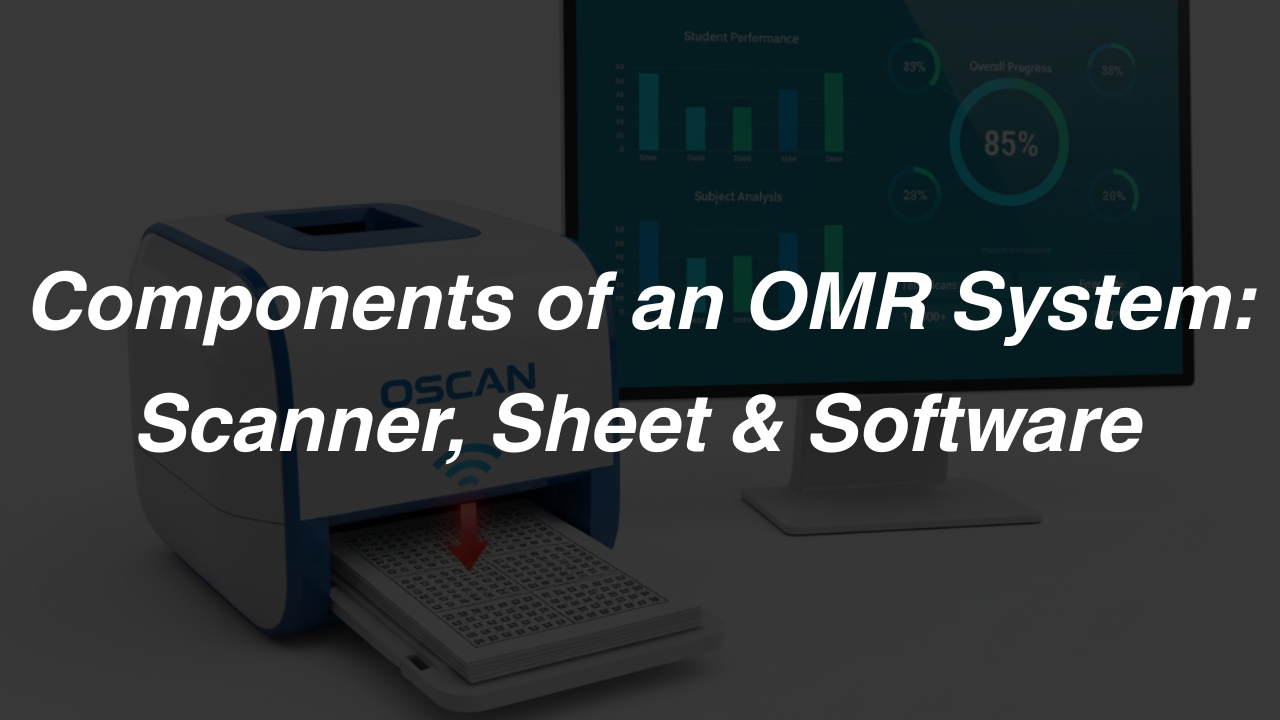
Conducting large-scale examinations efficiently requires more than just marking answers on paper. Modern evaluation systems rely on OMR (Optical Mark Recognition) technology, which combines specially designed sheets, scanning devices, and intelligent software to deliver accurate results at scale.
While many educators, administrators, and exam coordinators are familiar with OMR-based exams, fewer understand the components that make the system work seamlessly. In this blog, we break down the three essential elements of an OMR system—sheet, scanner, and software and explain how they work together to ensure speed, accuracy, and reliability.
Component 1: The OMR Sheet
The OMR sheet is the most visible part of the system. Though it looks like a simple answer sheet, it is precisely engineered for machine readability.
Design and Structure
A well-designed OMR sheet includes:
- Candidate Information Section: Roll number, registration ID, and personal identifiers that allow unique recognition of each sheet.
- Answer Area: Clearly defined bubbles (A, B, C, D, E) for multiple-choice questions.
- Alignment Marks: Printed reference points along the edges that help the scanner detect orientation and positioning.
- Instructions: Clear guidelines for candidates on how to mark answers correctly (pen type, bubble filling, etc.).
Importance of Sheet Quality
The accuracy of the entire system depends heavily on sheet quality. Poor printing, low-grade paper, or misaligned designs can result in scanning errors. Professional providers like Multigraphics ensure that OMR sheets are printed with precision and consistency to minimize such risks.
Component 2: The OMR Scanner
After the exam, completed sheets are processed using an OMR scanner. This device reads the marked responses and converts them into digital data for evaluation.
How OMR Scanners Work
- The scanner detects differences in reflectivity between filled and unfilled bubbles.
- Alignment marks guide the scanner to correctly locate rows and columns.
- Depending on the setup, scanners may be standalone devices or high-resolution flatbed scanners integrated with OMR software.
Types of OMR Scanners
1. Dedicated OMR Scanners
Designed specifically for large-scale exams, these scanners offer high speed and accuracy when processing thousands of sheets.
2. Flatbed Scanners with OMR Software
These scanners capture high-resolution images that are later analyzed by OMR software, making them suitable for smaller institutions or occasional exams.
Key Advantages
- Rapid processing of large volumes of sheets
- Higher accuracy than manual checking
- Automatic detection of errors such as multiple markings or blank responses
Component 3: OMR Software
The scanner captures data, but the OMR software is the intelligence behind the system. It analyzes scanned images, evaluates responses, and generates results automatically.
Core Functions of OMR Software
- Answer Recognition: Identifies marked responses and matches them with the answer key
- Score Calculation: Automatically assigns marks based on defined rules
- Error Detection: Flags unclear, multiple, or missing answers
- Result Generation: Produces scorecards, rankings, and section-wise analysis
- Data Management: Stores digital records for audits, performance tracking, and future reference
Modern OMR software also includes advanced analytics, enabling institutions to identify trends, evaluate performance, and improve examination quality.
How the Three Components Work Together
An OMR system functions effectively only when all three components are perfectly integrated:
- Sheet – Provides structured, machine-readable input
- Scanner – Captures the data accurately
- Software – Processes, evaluates, and generates results
For example, in a school board examination, hundreds of sheets are scanned within minutes. The software then processes the data and generates individual scorecards, class-level reports, and performance insights. If any component fails—poor sheet design, inaccurate scanning, or incorrect software configuration—the entire process can be affected.
Real-World Example (India)
A coaching institute conducting a mock test for 500 competitive exam aspirants can benefit significantly from an integrated OMR system:
- Sheet Design: Pre-printed sheets with unique candidate IDs
- Scanning: Batch scanning using a dedicated OMR scanner
- Software Evaluation: Automatic scoring, error detection, and detailed reporting
The entire evaluation process can be completed within hours instead of days, allowing students to receive faster feedback and faculty to analyze performance efficiently.
Advantages of an Integrated OMR System
Institutions that use a fully integrated OMR system benefit from:
- Speed: Automated processing reduces evaluation time dramatically
- Accuracy: Eliminates human errors in checking and calculation
- Scalability: Handles thousands of candidates without extra manpower
- Consistency: Ensures uniform evaluation standards
- Actionable Insights: Provides data-driven analysis for better decision-making
These benefits make OMR systems essential for schools, coaching institutes, government recruitment exams, and corporate assessments.
Common Mistakes and How to Avoid Them
Even with advanced OMR systems, issues can arise if components are poorly managed:
- Low-quality or misaligned printed sheets
- Incorrect scanning settings
- Use of improper pens or incomplete markings
- Outdated answer keys or software misconfiguration
Partnering with a reliable OMR solution provider like Multigraphics ensures that all components are optimized for secure, accurate, and hassle-free examination management.
Conclusion
An OMR system is more than just a scanner or a sheet—it is a coordinated ecosystem of three essential components: the OMR sheet, the scanner, and the software. Each plays a vital role in ensuring fast, accurate, and fair evaluations.
For schools, coaching institutes, government bodies, and corporates in India, understanding these components highlights the reliability and efficiency of OMR-based examinations. With modern solutions like Multigraphics, institutions can conduct exams smoothly, process results faster, and maintain the highest standards of accuracy and security.
As OMR technology continues to evolve with cloud integration and advanced analytics, it remains an indispensable tool in today’s fast-paced examination environment.
 Simplify complex operations with custom-built tech
 Ensure growth through automation and smart digital tools
 Reach wider audiences with scalable online infrastructure